Hire a Node.js Developer, Not an Agency.
APIs, microservices, integrations, and scaling — handled by one senior backend engineer. You talk to the person who writes the code, from scoping call to production deploy.
What a senior
Node.js engineer does
What You Can Hand Off
Backend work that ships to production.
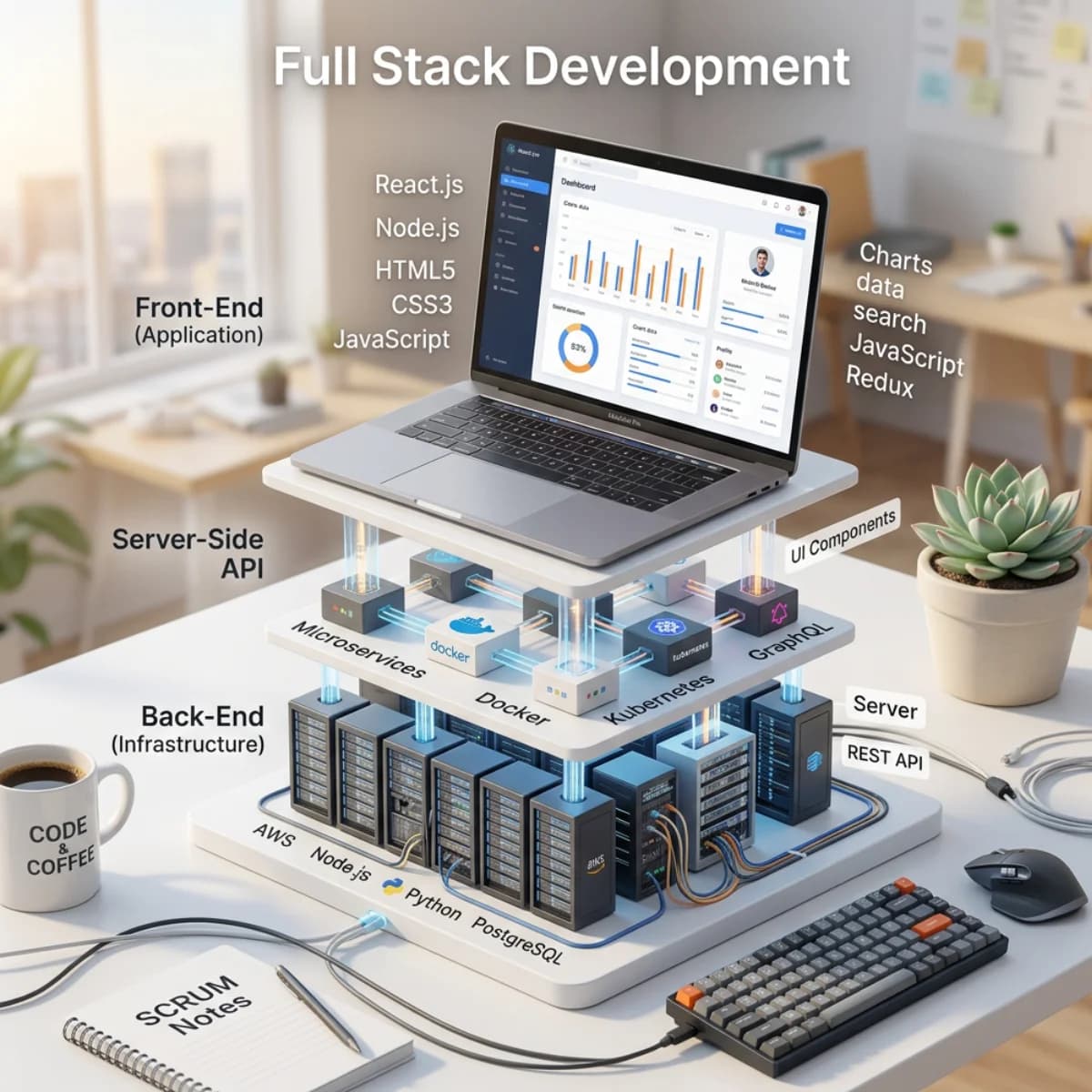
Most teams need backend work done to a production standard — not prototype quality, not something that needs rewriting six months later. What you can hand off: REST and GraphQL APIs built on Node.js with Express or Fastify; microservices with PM2 clustering and proper inter-service communication; third-party integrations that handle edge cases (Amazon SP-API, Stripe, payment gateways, OAuth providers, webhook consumers); queue and worker systems using SQS, Bull, or BullMQ; auth layers covering JWT, sessions, and OAuth2; and multi-tenant data architectures with proper isolation. If you have an existing Node.js service that needs scaling or optimisation, that's in scope too.
Every deliverable goes to production, not a staging environment. Code is documented and handed over on completion.
Includes
- — REST and GraphQL API design and build
- — Microservices and inter-service communication
- — Third-party integrations (Amazon SP-API, Stripe, OAuth, webhooks)
- — Queue and worker systems (SQS, Bull, BullMQ)
- — Auth — JWT, sessions, OAuth2
- — Multi-tenant data architecture with row-level security
- — Async job processing and background workers
Best forTeams that need a backend built right the first time.
TimelineScoped per engagement — quoted within 48 hours of the call
How Hiring Works
From first call to code in production.
It starts with a 30-minute scoping call. You describe the backend problem — whether it's a greenfield API, an integration, a scaling issue, or an existing service that needs work. I ask the questions that turn it into a buildable scope. From there: a fixed-price proposal with clear milestones arrives within 48 hours. For project work, delivery is staged — each milestone reviewed and signed off before the next begins. For retainer engagements, you get a set number of hours per month with priority response and rolling scope. Either way, you talk to me directly. No account manager, no project coordinator, no junior engineer doing the actual work while someone senior manages the relationship.
Staged delivery catches misalignments early. Fixed-price engagements don't move on scope without a conversation first.
Includes
- — 30-minute scoping call — no intake form, no commitment
- — Fixed-price proposal within 48 hours
- — Staged delivery with milestone sign-off
- — Async progress updates, no phantom status calls
- — Monthly retainer option for ongoing backend work
Best forTeams that want direct access to the engineer, not a managed service.
TimelineProposal within 48 hours of scoping call
Proof — Real Projects
Backend work that can be pointed to.
DietGhar (healthtech, founder): Node.js microservices with PM2 clustering, MongoDB, Redis, GitHub Actions CI/CD, zero-downtime rolling deploys. Live at dietghar.com. NyayX (legaltech, founder): Node.js API on AWS ECS, PostgreSQL with row-level security for multi-tenant isolation, AES-256 encryption at rest, append-only audit trail, S3, Redis. Live at nyayx.com. Amazon SP-API platform: synced 50,000+ SKUs across five marketplaces. Replacing polling with the Notifications API plus SQS and Lambda cut sync latency from 24 hours to under 15 minutes and reduced API calls by 90%. Black Friday scaling: survived approximately 12,000 concurrent users on a 2-million-product platform. PgBouncer transaction pooling multiplexed 8,000 app connections to 150 database connections — 4x throughput gain. Selective Redis caching and a serverless/ECS hybrid cut EC2 costs 35%.
Named accountability: one engineer built each of these, and can build yours.
Includes
- — DietGhar — Node.js microservices, PM2, MongoDB, Redis, CI/CD
- — NyayX — AWS ECS, PostgreSQL RLS, AES-256, multi-tenant
- — SP-API platform — 50k+ SKUs, 24h→<15min, 90% fewer API calls
- — Black Friday scaling — 12,000 concurrent users, PgBouncer 8000→150 connections
- — Cloud cost reduction — 35% EC2 cut via serverless/ECS hybrid
Best forAnyone who wants to see real backend work before engaging.
TimelineAll projects live in production — not demos
Typical stack
- Node.jsPrimary runtime
- Express / FastifyAPI framework
- PostgreSQLRelational data, RLS, PgBouncer
- MongoDBDocument data
- RedisCaching, queues, pub/sub
- AWS ECS / LambdaContainer and serverless workloads
- SQS / BullMQQueue and worker systems
- DockerContainerisation and local dev parity
Based in India, working async-first with clients in the US, UK, UAE, and Australia. IST timezone — most async threads don't need a call at all. When they do, we find a window that works.
What backend work do you take?
Node.js APIs (REST and GraphQL), microservices, third-party integrations (Amazon SP-API, Stripe, payment gateways, OAuth), queue and worker systems (SQS, Bull, BullMQ), auth (JWT, sessions, OAuth2), and multi-tenant data architectures. I also take scaling and optimisation work on existing Node apps — connection pooling, caching strategy, query tuning. If you're unsure whether your project fits, describe it in the scoping call and I'll tell you directly.
Do you build APIs from scratch or extend an existing one?
Both. Greenfield APIs are scoped on a call, priced up front, and delivered in stages. For existing codebases, I'll review the repo before the proposal and flag anything that affects the timeline or cost — no surprises mid-engagement. I've extended existing Node.js services across healthtech (DietGhar) and legaltech (NyayX) without rewriting what worked.
What experience do you have with third-party integrations?
Substantial. The most complex integration I've shipped is an Amazon SP-API platform syncing 50,000+ SKUs across five marketplaces. Using the Notifications API, SQS, and Lambda, we cut sync latency from 24 hours to under 15 minutes while making 90% fewer API calls. I've also integrated Stripe, Razorpay, S3, Redis, and various OAuth providers in production systems.
Can you scale our existing Node.js application?
Yes. I've scaled a 2-million-product platform through Black Friday at around 12,000 concurrent users. On the database side, PgBouncer transaction pooling reduced 8,000 app connections to 150 database connections — a 4x throughput gain. Redis caching and moving spiky workloads to serverless cut infrastructure cost 35%. I look at where the actual bottleneck is before recommending anything.
What are the engagement models?
Two options. Fixed-price project: scoped on a 30-minute call, quoted within 48 hours, delivered in milestones. Good for a defined API build, an integration, or a specific scaling problem. Monthly retainer: a set number of hours per month, priority response, rolling scope. Good for ongoing backend work or a team that needs a senior Node.js engineer on call. Both start with the same scoping call — no commitment on either side.
Related: DevOps Consulting · Hire a Next.js Developer · MVP Development · Amazon SP-API Automation
Have a backend problem and want to know if it's solvable in your timeline and budget? Start with a 30-minute call.
Book a scoping call